The obituary for the American mall has been written, many times. And for good reason—across the country, shopping centers are closing, pivoting to fulfillment hubs, or vanishing entirely from the cultural landscape.
But in Fairfield County, Connecticut, the story isn’t over.
Here, four malls are bucking the trend. They’re not just surviving—they’re adapting. Some are leaning into their legacy strengths. Others are reinventing themselves entirely. Together, they offer a snapshot of how suburban retail can remain relevant in an age of e-commerce and shifting consumer behavior.
Danbury Fair Mall: Thriving on Scale
Danbury Fair Mall is the most traditional of the four—but that’s exactly what makes it stand out. At 1.3 million square feet, it remains one of New England’s largest retail centers. Anchored by Macy’s, JCPenney, Dick’s Sporting Goods, and Primark, it thrives on size, accessibility, and brand mix.
It’s also functionally unchallenged in the region—there’s no comparable retail destination for miles. This geographic exclusivity, combined with a solid lineup of national anchors, gives it what you might call Big Mall Energy. Danbury Fair proves that the old model can still work—when executed at scale and with minimal competition.
Stamford Town Center: A Downtown Reboot
Stamford Town Center is a case of ongoing evolution. Opened in 1982, it’s now repositioning itself as a mixed-use hub in the heart of a growing downtown. A former anchor space is now home to Pickleball America—one of the largest indoor pickleball venues in the country. A padel court is on the way.
The tenant mix reflects a broader shift. High-end restaurants like Capital Grille, Terra Gaucha, and Nan Xiang occupy the street level. The New York Comedy Club adds nightlife energy. Families can take the kids to Angel Land, a large indoor playground, or the soon-to-open roller rink. Community programming—from cultural festivals to family holiday events—fills out the calendar.
This is retail reimagined as civic infrastructure, benefiting from its proximity to office workers, residents, and downtown foot traffic.
Trumbull Mall: Survival Through Simplicity
Trumbull Mall is a study in continuity. Built in 1964, it has remained remarkably stable, with core tenants like Target, JCPenney, and Torrid continuing to drive steady foot traffic. Unlike its counterparts, Trumbull hasn’t pursued radical transformation.
That’s intentional. While the Town of Trumbull has floated ambitious redevelopment plans, the current ownership appears focused on operating lean—minimizing reinvestment, controlling overhead, and keeping the mall functional for as long as demand holds.
It’s not flashy, but it works. In a challenged retail landscape, sometimes staying the course is the strategy.
The SoNo Collection: Built for the Next Era
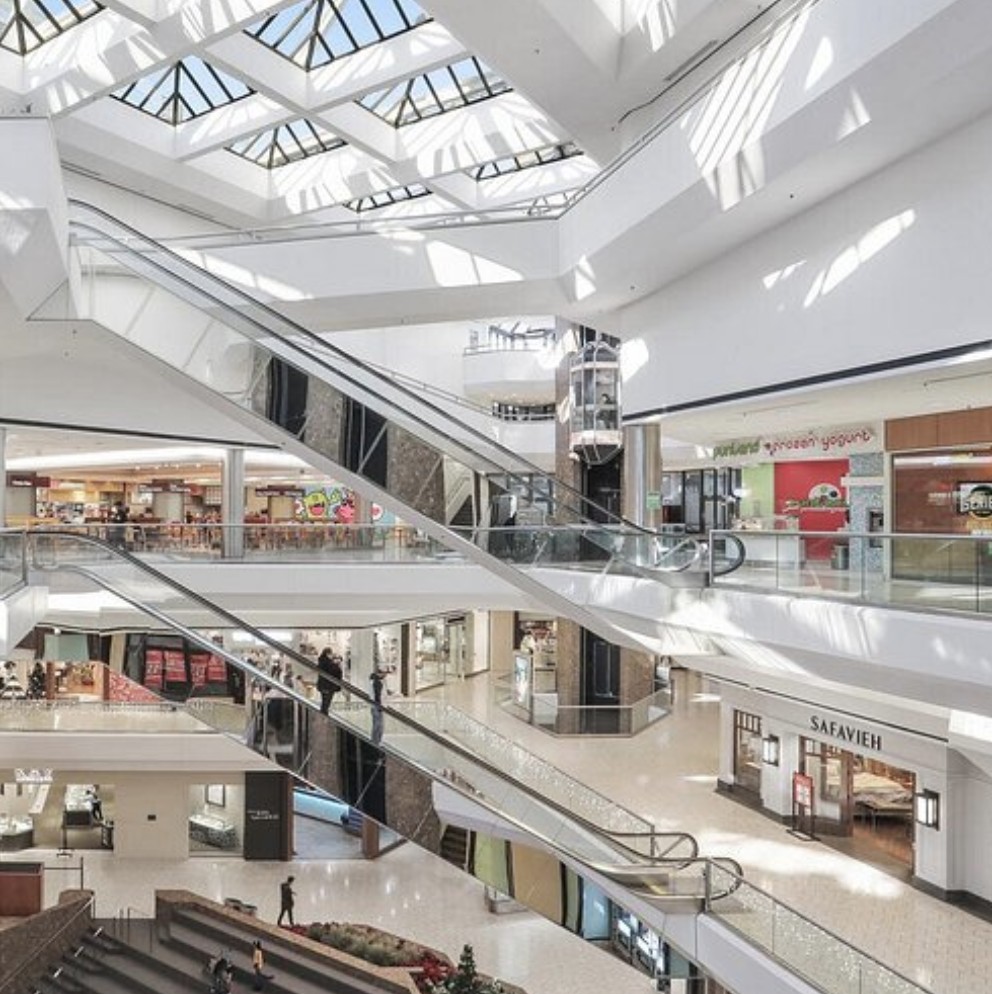
The SoNo Collection, in Norwalk, opened in 2019—making it one of the last ground-up malls built in the United States. It was designed from the start to break with tradition. With expansive architecture, curated pop-ups, and high-design aesthetics, it positions itself more as a lifestyle destination than a conventional shopping center.
While it aimed to attract marquee luxury tenants like Prada or Louis Vuitton, those ambitions haven’t fully materialized. Still, with Nordstrom and Bloomingdale’s as anchor tenants, it draws a steady stream of shoppers and maintains a polished, high-end atmosphere.
It may not have rewritten the rules—but it’s trying to bend them.
The Takeaway: Retail Isn’t Dead—It’s Shifting
Fairfield County’s malls aren’t immune to the forces reshaping American retail. But they haven’t been paralyzed by them, either. From scale and location to reinvention and resilience, each of these four properties is carving out its niche in real time.
The mall may be fading elsewhere. Here, it’s evolving.
Cress is an innovative real estate advisory firm representing buyers and sellers of high-end properties throughout Fairfield County, CT and beyond. On the sell side, Cress delivers marketing-driven support designed to expand visibility and maximize outcomes. Through its co-listing model, Cress partners alongside listing agents to provide digital-first distribution, high-quality content creation, and proactive demand generation strategies that extend well beyond traditional MLS exposure.
On the buy side, Cress offers flat-fee representation and commission rebate programs that bring efficiency and transparency to luxury transactions while maintaining a high standard of service. Known for strategic insight, modern marketing execution, and deep local knowledge, Cress provides a smarter, more aligned approach to buying and selling real estate.
For more information, visit www.callcress.com.
George Cress
(212) 203-5251
george@cress.co
License #RES.0832278
Fairfield County, CT
Real Broker CT, LLC
License #REB.0751297
100 Pearl Street, 14th Floor
Hartford, CT 06103