Connecticut was never home to a Yorktown or a Bunker Hill, but its role in the American Revolution was substantial. The state supplied troops, food, weapons and other necessities to the Continental Army, defended a vulnerable coastline, gathered intelligence, and provided the setting for military decisions that helped determine the course of the war.
That history remains unusually tangible. From a battlefield overlooking the Thames River to the home of Nathan Hale and the room where George Washington met with his French allies, these five Connecticut sites offer a direct connection to the fight for American independence.
Fort Griswold Battlefield State Park, Groton
Fort Griswold preserves the site of one of the most violent episodes of the Revolution in Connecticut.
By September 1781, the war had come full circle for Benedict Arnold. Born in Norwich and once celebrated as one of America’s most capable military commanders, Arnold had defected to the British the previous year. Now a British brigadier general, he returned to his home state at the head of an attacking force.
On September 6, British troops descended on New London and Groton. Across the Thames River, roughly 165 defenders gathered at Fort Griswold under Lieutenant Colonel William Ledyard. They were badly outnumbered.
The Americans resisted for roughly 40 minutes before the British breached the fort. What followed made the battle infamous. Connecticut records describe 88 of the fort’s 165 defenders as having been massacred after the fort was captured. Ledyard was among those killed. The fighting came just six weeks before the British surrender at Yorktown.
Today, Fort Griswold Battlefield State Park preserves the fortifications and battlefield overlooking the Thames, making it possible to stand on much of the ground where the fighting occurred.
Fort Trumbull State Park, New London
Fort Trumbull sits almost directly across the Thames from Fort Griswold, but its story illustrates another part of Connecticut’s importance to the Revolution: protecting the coast and the movement of wartime supplies.
Connecticut began fortifying the New London-Groton area in 1775 and 1776, constructing Fort Trumbull on the New London side of the river and Fort Griswold opposite it. The imposing masonry fort visitors see today came later; Fort Trumbull was rebuilt after the Revolution and again extensively between 1839 and 1852.
New London was valuable in part because Connecticut had become a major supplier to the Continental Army. Food, livestock, cannon and other necessities moved out of a state whose farmers and merchants already had considerable experience transporting goods over long distances. Those contributions helped earn Connecticut the nickname “The Provision State.”
The harbor was also a center of American privateering. More than 100 privateering ventures originated from New London during the war, making the port a persistent concern for the British.
That vulnerability became painfully clear during Benedict Arnold’s 1781 attack. Fort Trumbull was defended by only 23 men under Captain Adam Shapley. After firing on the approaching British, the defenders spiked their guns and crossed the Thames to Fort Griswold, where the far bloodier confrontation followed.
The current fort therefore isn’t the Revolutionary structure. But the site and harbor are very much part of the landscape Connecticut was trying to defend.
Nathan Hale Homestead, Coventry
Nathan Hale’s story lasted only 21 years, but it became one of the Revolution’s most enduring legends.
Born on his family’s Coventry farm in 1755, Hale attended Yale and worked as a schoolteacher before joining the Continental Army. In September 1776, as George Washington desperately sought information about British forces around New York, Hale volunteered for an intelligence mission behind enemy lines.
He never returned.
The British captured Hale and hanged him as a spy on September 22, 1776. He is traditionally remembered for declaring, “I only regret that I have but one life to lose for my country,” although historians treat the precise wording of his final statement with some caution.
There is an interesting detail about the Homestead itself: Hale grew up on this farm, but the Georgian house visitors see today was completed in 1776, the same year he died. It was built by his parents for their large family and has remained remarkably intact. Six of the eight Hale brothers served in the Continental Army.
The 17-acre property still includes open fields, stone walls and historic barns, giving visitors a sense of the rural Connecticut landscape from which Hale emerged. The house is furnished with Hale family possessions and period antiques and is open seasonally for tours.
Putnam Memorial State Park, Redding
If Fort Griswold represents combat and Nathan Hale intelligence, Putnam Memorial State Park captures a less glamorous reality of the Revolution: keeping an army together through winter.
During the winter of 1778–79, troops under Major General Israel Putnam established an encampment in what is now Redding. Its location was strategic, allowing the army to watch for a possible British movement inland while remaining positioned between important routes in southwestern Connecticut.
Soldiers built 116 huts, with roughly 12 men crowded into each one. They spent the winter dealing with cold, shortages and the monotonous hardship of military life far from the famous battlefields.
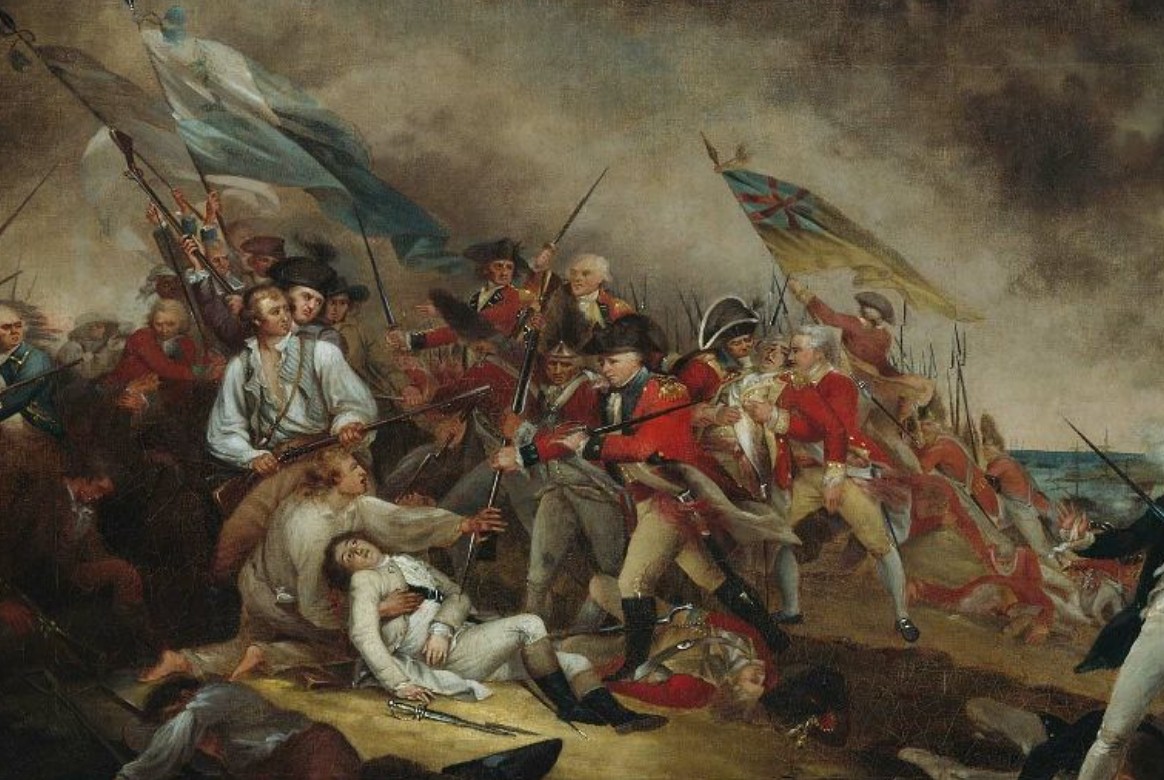
Putnam himself was already one of Connecticut’s best-known military figures. He had fought in the French and Indian War and became a senior Continental commander early in the Revolution, famously serving at Bunker Hill.
The Redding encampment eventually disappeared back into the landscape. Grass, brush and then forest covered much of the site, leaving stone chimney remains among the few obvious traces of the soldiers’ huts. Interest in preserving the encampment grew during the 19th century, eventually leading to the creation of Putnam Memorial State Park.
Today, visitors can walk through the landscape where Connecticut troops spent that difficult winter and see archaeological remnants of the encampment.
The Webb House, Wethersfield
By the spring of 1781, the Revolution had dragged on for six years. The Americans now had something they had lacked earlier in the war: substantial military support from France.
That made a meeting in Wethersfield especially important.
George Washington arrived at Joseph Webb’s house in May 1781 and used it as his headquarters. French commander Comte de Rochambeau soon joined him. The commanders had major questions to resolve: where should their combined armies strike, how would their forces be coordinated, and what role could the French navy play?
French Admiral de Grasse’s fleet was expected to become available later that summer, opening possibilities that hadn’t existed before. Rochambeau favored operations in Virginia, while Washington initially saw advantages in attacking the British around New York.
The Wethersfield Conference did not produce a simple blueprint for Yorktown. Instead, it helped establish the cooperation and campaign planning that made what followed possible. American and French armies subsequently joined forces, and when the opportunity arose to trap British General Cornwallis in Virginia, they moved south.
French naval power proved decisive. De Grasse’s fleet prevented the British from reinforcing or evacuating Cornwallis by sea, while Washington and Rochambeau’s combined American and French forces surrounded Yorktown.
Cornwallis surrendered on October 19, 1781. Major fighting was effectively over.
The Joseph Webb House survives today as part of the Webb-Deane-Stevens Museum, allowing visitors to enter the building where Washington and Rochambeau wrestled with the decisions that preceded the final campaign.
Sponsored by CTVisit.com
George Cress of Real Broker represents home buyers and sellers throughout Connecticut, with a focus on Fairfield County. He combines technology, local market knowledge, and modern real estate marketing to help buyers keep more of their money and sellers generate greater interest in their homes.
For buyers, George offers flat-fee buyer representation and buyer commission rebates, providing meaningful savings alongside full-service guidance, negotiation, and support through closing. For sellers, he uses property storytelling, video, targeted digital advertising, and one of Connecticut’s largest social media audiences focused on local real estate to reach beyond traditional MLS exposure and attract more qualified interest. Through Co-List with Cress, sellers can add these marketing capabilities while continuing to work with their preferred listing agent.
Explore active Connecticut homes for sale, including listings in Fairfield, Westport, Greenwich, and other Fairfield County communities. To discuss buying or selling a home in Connecticut, contact George Cress.
George Cress
(212) 203-5251
george@callcress.com
License #RES.0832278
Fairfield County, CT
Real Broker CT, LLC
License #REB.0751297
100 Pearl Street, 14th Floor
Hartford, CT 06103