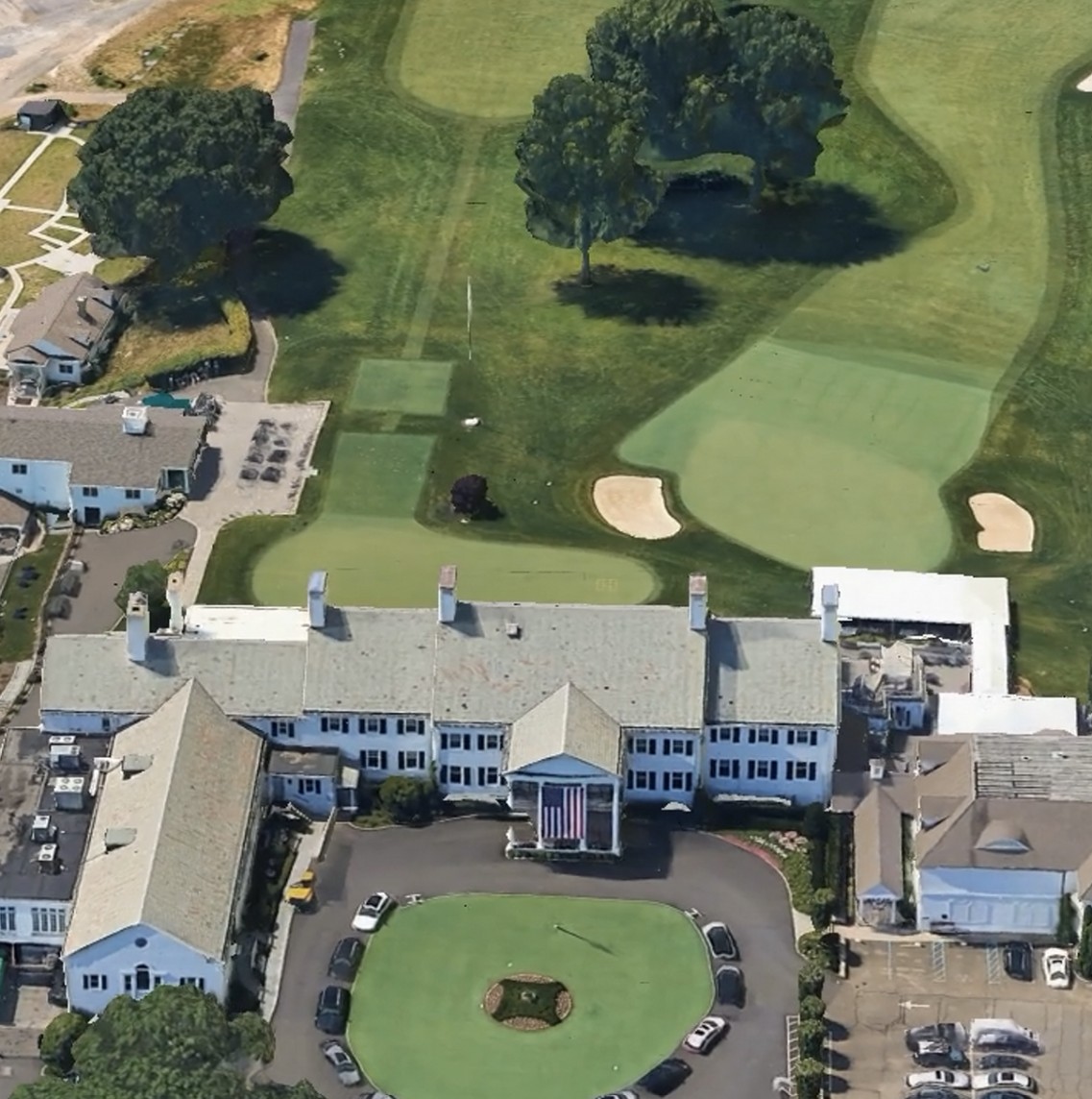
Greenwich Country Club, a pillar of Connecticut’s elite sporting and social scene, boasts a history as rich as its rolling greens. From its humble five-hole beginnings to its present-day status as a premier country club, the story of GCC is one of resilience, transformation, and, well, a few unfortunate fires.
The Early Days: Golf, Oysters, and Electric Hill
It all started in 1892 as the Fairfield County Golf Club, when Julian Curtiss—then president of sporting goods giant A.G. Spalding—convinced a group of friends to embrace a new game called golf. With an enticing oyster supper, he lured his guests onto a makeshift five-hole course. Curtiss’s fascination with golf deepened, and in 1894, he played a pivotal role in Spalding producing the first set of golf clubs in America. The game caught on, and by 1895, the club expanded to nine holes, quickly becoming a hub for Greenwich’s elite.
The club found a permanent home thanks to Warren Smith, who donated land from his speculative real estate venture on North Street. The area, known as “Electric Hill,” was famous for housing what Thomas Edison claimed to be the first electrified home, owned by Edward H. Johnson, president of the gas and electric company that later became Con Edison. It was an era of innovation, and golf was the next big thing.
By 1908, the club had its full 18-hole course, thanks in part to the generosity of Edmund Converse. A financial titan who served as president of United Steel and was a key player in J.P. Morgan’s banking empire, Converse helped fund the expansion and served as club president three times. The club formally rebranded as Greenwich Country Club in 1909, cementing its status as more than just a golf destination—it was now a full-fledged social institution.
The Fires: A Club’s Trial by Flames
Greenwich Country Club’s history is marked not only by its lush fairways but also by a series of dramatic fires that tested its endurance. The first major fire struck in January 1896, when the club’s leased clubhouse burned down. But the real trouble began in 1929 when a blaze ravaged the newly built clubhouse, causing $150,000 in damages—only half of which was covered by insurance. The club rebuilt, enlisting architect William F. Dominick to design a grander, more resilient clubhouse.
Then came the worst disaster of all. On Labor Day, 1960, a smoldering electrical fire erupted in the walls of the clubhouse. At 4 AM, an explosion sent flames surging through the building. Firefighters battled for 14 hours, pumping water from the club’s pool and nearby lakes. The inferno reduced the clubhouse to rubble, destroying priceless artwork and trophies, including the Queen Victoria Diamond Jubilee Cup. Remarkably, there were no fatalities, though 19 firemen suffered injuries.
The debate over whether to rebuild on-site or move to Backcountry Greenwich ensued. Some members defected to found the Stanwich Club, but those who remained voted to stay put. By December 1961, a new Georgian Colonial-style clubhouse stood tall, a symbol of the club’s unwavering spirit.
A Modern Legacy: Beyond Golf
While golf remains at the heart of Greenwich Country Club, its offerings have expanded dramatically. Members today enjoy tennis, squash, paddle, swimming, fitness, bowling, and even skeet shooting. The club’s dining options range from refined dining rooms to casual poolside fare. In 2018, golf architect Beau Welling revitalized the course, enhancing its greens and bunker complexes for a new era of play.
Cress is an innovative real estate advisory firm representing buyers and sellers of high-end properties throughout Fairfield County, CT and beyond. On the sell side, Cress delivers marketing-driven support designed to expand visibility and maximize outcomes. Through its co-listing model, Cress partners alongside listing agents to provide digital-first distribution, high-quality content creation, and proactive demand generation strategies that extend well beyond traditional MLS exposure.
On the buy side, Cress offers flat-fee representation and commission rebate programs that bring efficiency and transparency to luxury transactions while maintaining a high standard of service. Known for strategic insight, modern marketing execution, and deep local knowledge, Cress provides a smarter, more aligned approach to buying and selling real estate.
For more information, visit www.callcress.com.
George Cress
(212) 203-5251
george@cress.co
License #RES.0832278
Fairfield County, CT
Real Broker CT, LLC
License #REB.0751297
100 Pearl Street, 14th Floor
Hartford, CT 06103