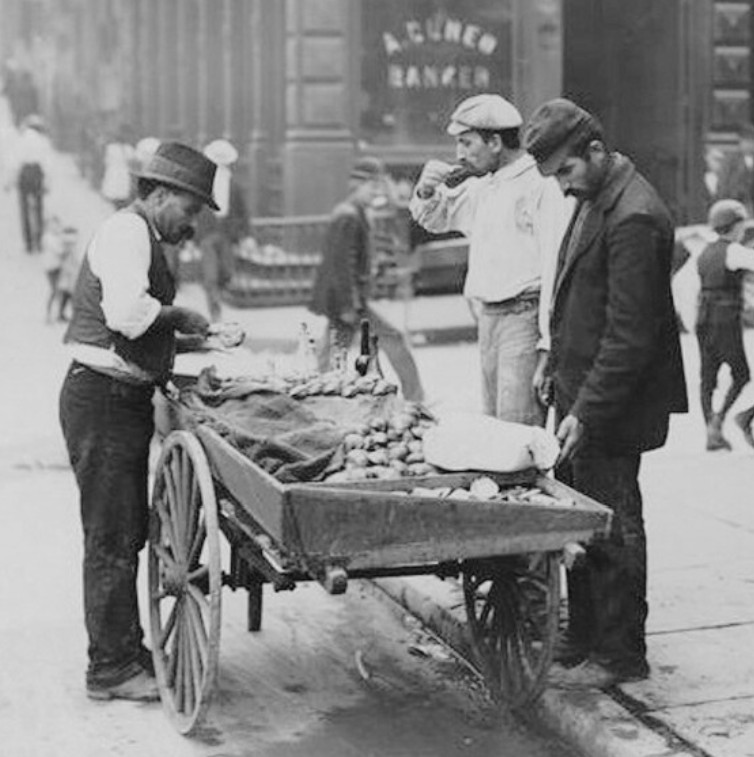
Connecticut’s oyster industry wasn’t just a coastal tradition—it was at the center of a full-blown national craze. In the late 1800s, the country entered what became known as the Oyster Craze. Oysters were everywhere—from street carts to fine dining rooms—and Connecticut’s shoreline helped feed the frenzy.
But behind the boom is a deeper story: of overfishing, collapse, and a hard-fought return. This is the story of the Eastern oyster—Crassostrea virginica—and how Connecticut nearly lost it, then brought it back.
Early Roots and Regulation
Oysters have long been a staple of life along the Connecticut coast—first harvested by Indigenous communities and later by European settlers. By the 1700s, demand had already grown so intense that towns like Groton and Stonington began passing some of the earliest fishery laws in colonial America. One of the most forward-thinking came in 1762, when New Haven banned oystering from May through August to protect spawning season. It was an early recognition that nature needed time—and restraint—to sustain itself.
The Rise of the Oyster Craze
By the 1800s, Connecticut wasn’t just harvesting oysters—it was farming them. Oystermen created artificial beds in Long Island Sound, seeded them with larvae, and raised oysters to market size. New Haven, Bridgeport, and Norwalk became oyster powerhouses. But even that wasn’t enough. As local beds struggled to meet exploding demand, oystermen turned to imports. By the 1850s, schooners were hauling millions of bushels from the Chesapeake to New Haven’s Fair Haven neighborhood, where the oysters were processed and shipped across the country.
At the height of the Oyster Craze—roughly 1880 to 1910—Americans were consuming over 160 million pounds of oyster meat each year. In New York City alone, the average resident ate an estimated 600 oysters annually. And much of that supply flowed through Connecticut. At its peak, the state operated the world’s largest fleet of oyster steamships. Connecticut wasn’t just riding the craze—it was powering it.
From Slow Decline to Sudden Collapse
The industry held strong into the 20th century, but pressure mounted—pollution, coastal development, and declining water quality gradually weakened the beds. By mid-century, storms, dredging, and food safety concerns accelerated the decline. Then came the collapse. In the late 1990s, warming waters and parasitic disease outbreaks devastated Connecticut’s oyster population. Up to 90% of the beds were lost. What had once been a global leader in oyster production was suddenly clinging to survival.
The Aquaculture Comeback
But the industry didn’t die. It adapted. Aquaculture stepped in. Scientists developed parasite-resistant oyster strains. Farmers began growing seed oysters in hatcheries, then raising them in floating cages and managed beds in Long Island Sound. This new approach didn’t just bring back the oyster—it made it better. The oysters were cleaner, larger, and grew in waters that were actively improving thanks to their natural filtration. In many ways, the oyster became both product and environmental partner. Today, aquaculture drives a $30 million marine economy in Connecticut, and oysters account for nearly half of that. Local farms stretch from Mystic to Norwalk, and Connecticut oysters are once again prized on menus across the country.
Oysters, Identity, and Community
The resurgence of the oyster isn’t just economic—it’s cultural. Towns along the coast have reconnected with their maritime heritage. Restaurants serve local shellfish with pride. And every fall, thousands gather at the Norwalk Oyster Festival—a celebration of food, history, and the little bivalve that helped build Connecticut’s shoreline.
A Legacy Reclaimed
Connecticut’s oyster industry was built on abundance, nearly lost to overreach, and brought back through science, sustainability, and grit. The Oyster Craze may be over, but what’s emerged is something more grounded—and more enduring. A story not just of what we eat, but how we care for the ecosystems that feed us.
Cress is an innovative real estate advisory firm representing buyers and sellers of high-end properties throughout Fairfield County, CT and beyond. On the sell side, Cress delivers marketing-driven support designed to expand visibility and maximize outcomes. Through its co-listing model, Cress partners alongside listing agents to provide digital-first distribution, high-quality content creation, and proactive demand generation strategies that extend well beyond traditional MLS exposure.
On the buy side, Cress offers flat-fee representation and commission rebate programs that bring efficiency and transparency to luxury transactions while maintaining a high standard of service. Known for strategic insight, modern marketing execution, and deep local knowledge, Cress provides a smarter, more aligned approach to buying and selling real estate.
For more information, visit www.callcress.com.
George Cress
(212) 203-5251
george@cress.co
License #RES.0832278
Fairfield County, CT
Real Broker CT, LLC
License #REB.0751297
100 Pearl Street, 14th Floor
Hartford, CT 06103